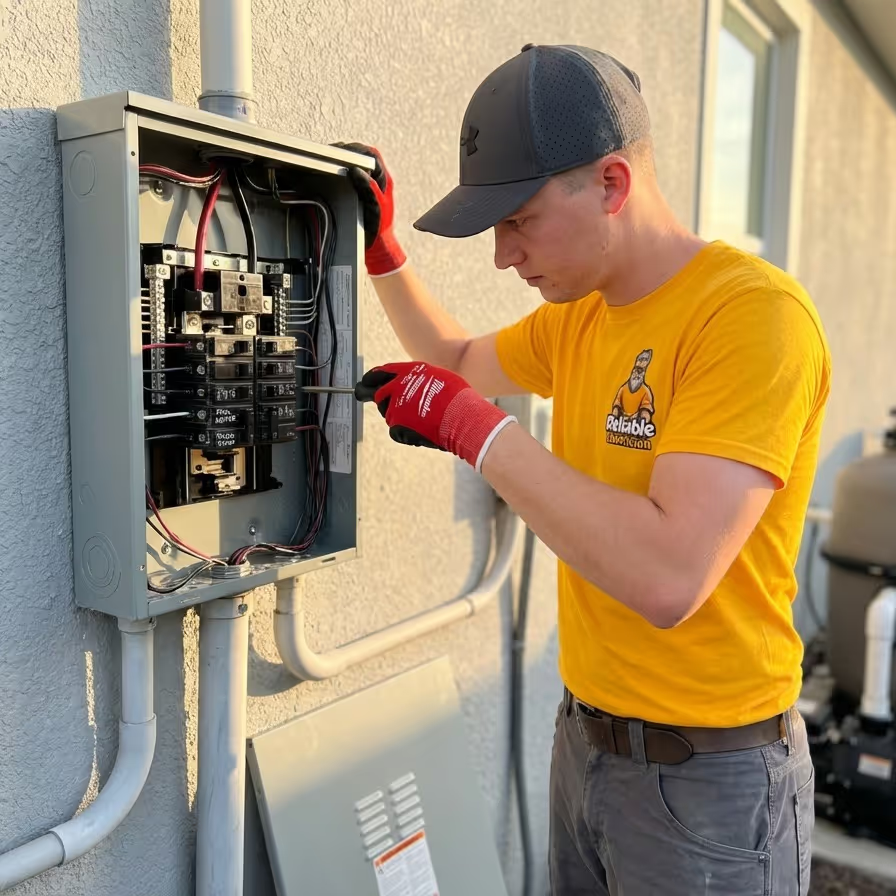
Electrical subpanels
Electrical subpanel installation, repair & replacement in Odessa, Westchase, Trinity & Keystone, FL.

Electrical Subpanel Services in Odessa, Westchase, Trinity & Keystone, FL
Subpanel Installation, Repair & Replacement From Licensed Florida Electricians
When your main electrical panel is running out of space or a specific area of your home needs its own dedicated power distribution, an electrical subpanel is the right solution. At Reliable Electrician, we provide professional subpanel installation, repair, and replacement services for homeowners throughout Odessa, Westchase, Trinity, and Keystone — giving your home the electrical capacity and organization it needs to handle modern demands safely and efficiently.
What Is an Electrical Subpanel?
An electrical subpanel is a secondary distribution panel that receives power from your main panel and redistributes it to circuits in a specific area of your home. It doesn't add more power to your home's overall supply, but it does give you a far more manageable and efficient way to organize circuits in spaces that require significant electrical capacity. Subpanels are commonly installed in:
- Garages & workshops — supporting power tools, lighting, and heavy-duty equipment
- Basements — providing dedicated circuits for finished living spaces or utility areas
- Home additions — serving new rooms or structures without overloading the main panel
- Outdoor areas — powering pool equipment, hot tubs, or detached structures like guest houses
If your main panel has no available breaker slots but you need to add new circuits for a large appliance, EV charger, or renovation project, a subpanel is often the most practical and cost-effective path forward.


Types of Subpanels & Why Professional Installation Is Essential
Trusted Subpanel Experts Serving West Tampa Bay Homeowners
Not all subpanels are the same, and selecting the right type for your specific application matters. At Reliable Electrician, our licensed electricians assess your home's existing electrical capacity, your intended use, and your installation location before recommending the most appropriate subpanel solution. Common subpanel types we install include:
- Main Lug Only (MLO) subpanels — fed directly from the main panel, ideal for detached structures and additions
- Main breaker subpanels — include a built-in main breaker for independent shutoff, adding an extra layer of safety and control
- Load centers — versatile distribution panels suited for a wide range of residential applications
- Flush and surface mount subpanels — installation style options depending on wall space and access
- Indoor and outdoor rated subpanels — weatherproof enclosures for exterior installations near pools, hot tubs, or outbuildings
Subpanel work involves connecting directly to your home's main electrical service — one of the highest-voltage points in your entire system. This is not a DIY project under any circumstances. Improper installation can result in dangerous backfeeds, code violations that affect your homeowner's insurance, and electrical hazards that may not reveal themselves immediately.
At Reliable Electrician, every subpanel installation is completed to current NEC standards and local Florida code requirements, with all necessary permits pulled and a thorough system test performed before we consider the job complete. You'll receive a clear, upfront estimate before any work begins — no hidden charges and no surprises.
Call Reliable Electrician today to schedule your electrical subpanel service anywhere in Odessa, Westchase, Trinity, or Keystone, FL.


Get your electrical needs done with Reliable Electrician!
Get your appointment booked as soon as possible by calling us at (813) 333-5331 or contact us online
to learn more!
Frequent questions
Get clear, honest answers about our electrician services, scheduling, and what makes us the trusted choice
for electrical repairs.
You should call a licensed electrician if you notice flickering or dimming lights, frequently tripping circuit breakers, warm or discolored outlets, sparking switches, burning smells, or partial power loss. These are common signs of electrical wiring problems, overloaded circuits, or panel issues. Attempting DIY electrical repair can increase the risk of electrical fire or shock. Professional electrical repair ensures your system is diagnosed accurately and restored safely according to code.
Common indicators include breakers that trip repeatedly, buzzing sounds from the breaker box, overheating, corrosion, or appliances not running at full power. Older electrical panels may not support today’s energy demands from HVAC systems, kitchen appliances, EV chargers, and home electronics. An electrical panel inspection can determine whether repair, replacement, or a full panel upgrade is needed to improve safety and reliability.
Frequent breaker tripping is usually caused by overloaded circuits, short circuits, ground faults, or faulty wiring. While a breaker is designed to shut off power to prevent overheating and electrical fires, repeated tripping signals an underlying issue. A professional electrician can identify whether the problem involves wiring repair, circuit redistribution, appliance load imbalance, or breaker replacement.
GFCI outlet installation is required in moisture-prone areas such as bathrooms, kitchens, garages, laundry rooms, and outdoor spaces. Ground Fault Circuit Interrupter outlets reduce the risk of electrical shock by cutting power when irregular current flow is detected. If your outlets lack test and reset buttons in these areas, upgrading to code-compliant GFCI protection improves household electrical safety.
A residential electrical inspection is recommended every 3–5 years, especially for older homes or properties with recent renovations. Inspections help identify outdated wiring, aluminum wiring concerns, panel capacity issues, and potential fire hazards. Preventative electrical maintenance ensures your home’s electrical system remains safe, efficient, and capable of supporting modern power demands.
More services
Explore all services

Safe, Expert Electrical Solutions



Copyright © Reliable Electrician | 2017-2026 | All Rights Reserved